
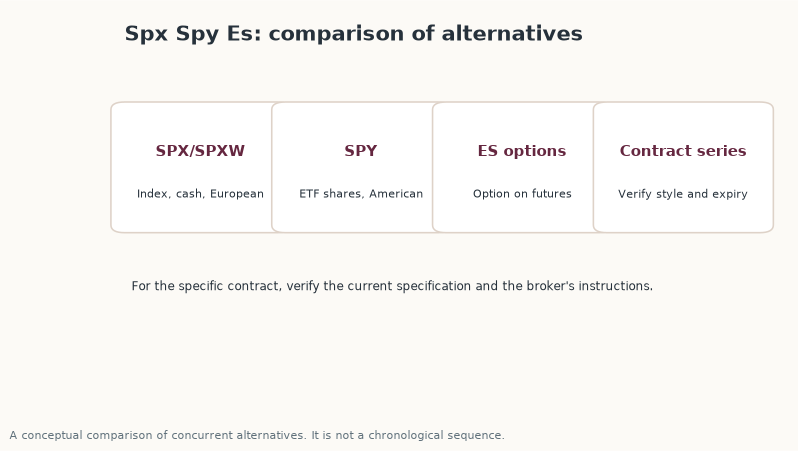
SPX, SPY and ES track approximately the same equity risk, but they are not interchangeable contracts. We will show how they differ at expiration, in tied-up capital, in dividends and in the method of settlement.
First, clarify the instrument
SPX is an index option on the level of the S&P 500 index, SPY is an option on SPY ETF shares, and ES options are options on the E-mini S&P 500 futures contract. The underlying that you receive or settle at exercise is therefore fundamentally different.
Basic contractual differences
| Property | SPX/SPXW | SPY | Options on ES futures |
|---|---|---|---|
| Underlying | S&P 500 index | 100 ETF shares per standard contract | One ES futures contract |
| Nominal multiplier | 100 USD per index point | 100 shares per standard contract | ES futures: 50 USD per point |
| Exercise style | European | American | Varies by the specific series |
| Settlement | Cash | Delivery / receipt of ETF shares | Creation of a position in the underlying futures per the contract |
The table is didactic, not a complete specification. The specific ES expirations and trading hours must be verified per series.
SPX is not a single expiration
Standard traditional monthly SPX are usually AM-settled with a settlement value derived from the opening prices of the components. SPXW series, including many daily/weekly expirations, are PM-settled. The exact traded series decides, not merely the SPX label in the platform. The AM SET value need not match the commonly followed SPX open.
What happens after exercise of an ES option
With an option on ES, exercise/assignment can create a futures position, and therefore continuing futures exposure after the option expires. Some ES options have a European, others an American exercise style; the fixing and the rules vary by contract. Confusing option settlement with SPX cash settlement is dangerous.
Compare risk, not just premium
Normalize the comparison to notional, delta exposure, spread, required margin, number of contracts, liquidity hours and currency risk. The nominal price of SPY options in dollars cannot be compared directly with an SPX or ES point without the multiplier. The SPY ETF pays dividends; the SPX index as such is not a tradable share.
Before entering a position
- I identify the exact symbol and expiration series.
- I verify the exercise style, the settlement value and the last trading moment.
- I recalculate the multiplier and the potential futures/ETF delivery.
- I quantify fees, margin and execution liquidity.
Sources
- Cboe – SPX Index Options SpecificationsSPX specifications.
- Cboe – S&P 500 Weeklys Options SpecificationsComparison of SPX/SPXW/SPY.
- CME – E-mini S&P 500 Tuesday and Thursday Options FAQRules of certain ES expirations.
- CME – E-mini S&P 500 quarterly PM Options FAQSpecifications of quarterly ES options.The source link was unavailable when checked on 23 October 2026.